



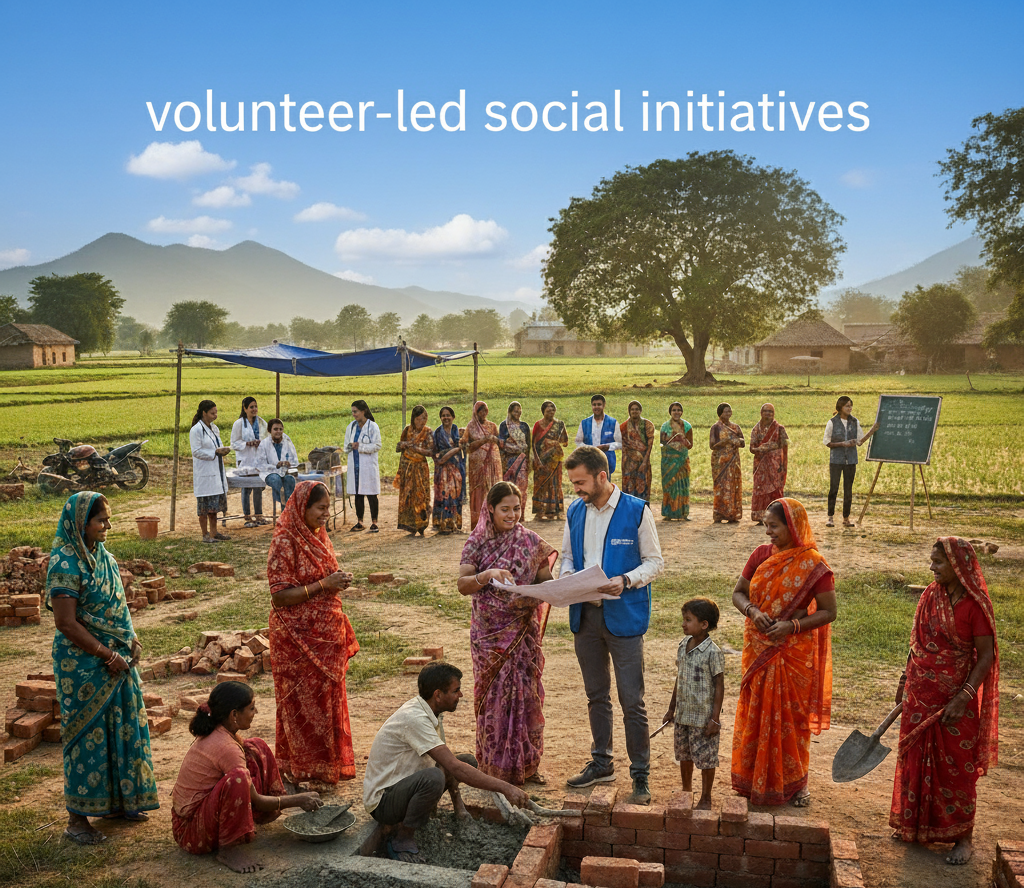
Volunteering is more than just occasional help, it can be the heart of sustainable change. Volunteer-led social initiatives are driving positive impact across India by empowering individuals and communities to shape their own futures. In this blog, we explore how these initiatives succeed, especially when built with community-led programs, and offer practical tips to launch or scale similar efforts through inspiring examples from JJFIndia.com.
Table of Contents
What Are Volunteer-Led Social Initiatives?
Unlike top-down schemes, these are rooted in passion, local insight, and a desire to give back. They vary from educational drives and health camps to environmental cleanups, mental health support, and more.
Because volunteers are personally invested, their work often carries greater empathy, flexibility, and connection to beneficiaries. The synergy can turn a small outreach into a larger movement.
The Role of Community-Led Programs
A community-led program is one where community members define the problem, design the solutions, and take ownership of implementation. Rather than imposing solutions, external actors support, enable, and resource. This ensures relevance, accountability, and sustainability.
Why Volunteer-Led + Community-Led = Strong Impact
- Ownership & buy-in
Volunteers can encourage and scaffold this process within community-led programs, ensuring that local voices guide decisions and long-term goals are maintained through shared responsibility and collaboration. - Local relevance
Community members understand local needs, language, social dynamics. Volunteers risk making errors if they do not tap into that local wisdom. - Capacity building
A volunteer-led social initiative can mentor and train community members to run programs themselves, turning beneficiaries into leaders. - Cost efficiency
Volunteers reduce staffing cost, while community systems reduce dependence on external resources. - Trust and credibility
A program run in partnership rather than imposition generates trust among local stakeholders.
JJFindia.com is a good example of this philosophy in practice. Their volunteer programs span education, health, disaster relief, and more, but they often coordinate with local communities to deliver relevant interventions.
Key Components of Successful Initiatives
- Clear vision & mission: Volunteers and communities must share a direction.
- Community consultation: Listen first, surveys, meetings, focus groups.
- Shared decision making: Let the community decide priorities, modalities.
- Training and mentoring: Equip volunteers and community leaders to lead.
- Resource support: Provide tools, funding, materials as needed.
Volunteer-led social initiatives in Practice
- Health camps
Volunteers may organize a free medical screening in a village. The volunteers bring in doctors and logistics, but the planning is community-led and closely aligned with ongoing community-led programs to ensure sustainability and continued local participation. - Education support
In underprivileged localities, volunteers may teach classes or remedial lessons. However, when integrated with a community-led program, parent committees and local students decide the subjects, schedule, and metrics. Volunteers act as mentors and capacity builders rather than sole executors. - Mental health & counseling
JJF India’s “Mind Unload” program offers support and safe spaces. To make it more sustainable, local youth or community volunteers can be trained, so the effort becomes more embedded, as demonstrated by JJF India. In this way, a volunteer-led social initiative evolves into a community-led program in mental health support. - Disaster relief & resilience
Volunteers often respond immediately after disasters. Post-disaster recovery is more impactful when local communities establish their own committees, guided by volunteers but driven by locals. JJFIndia.com actively supports such disaster relief initiatives by facilitating volunteer engagement and local leadership.
10 Pro Tips for Volunteer-Led Social Initiatives
1. Start with empathy listening sessions
Before doing anything, spend time listening to community members’ needs and priorities. Use open-ended questions, don’t begin with your own checklist. Listening builds trust and helps volunteers understand local realities deeply. It also prevents assumptions and ensures the initiative truly addresses what matters to the community.
2. Co-create a logic model
With community, map inputs, activities, outputs, and outcomes. This ensures volunteers and locals share a roadmap. Co-creation allows transparency and accountability from both sides. It also aligns expectations and encourages ownership among community members, making the initiative more grounded and goal-driven in the long run.
3. Recruit local volunteers
Whenever possible, involve people from the very community you are serving. This strengthens trust and relevance. Local volunteers can act as cultural bridges, ensuring smoother communication and stronger engagement. They also provide valuable insights and continuity, even when external volunteers rotate or move on to other projects within community-led programs.
4. Train in soft skills and leadership
Equip volunteers and community liaisons with facilitation, conflict resolution, communication, and monitoring skills. When volunteers and community leaders develop confidence and empathy, they foster a supportive environment that keeps everyone motivated and focused on shared goals. These are values also emphasized by JJFIndia.com in its community empowerment initiatives.
5. Use small pilot projects
Before scaling, test your approach in one area. This lets you learn and adapt without overcommitting. Small pilots reveal what works best in that specific context. They also allow both volunteers and the community to gain experience, build rapport, and adjust strategies before expanding the program’s reach.
6. Build feedback loops with reflection sessions
Hold regular sessions with community and volunteers to share what worked, what didn’t, and adapt. These sessions keep the initiative dynamic and learning-focused. Honest feedback nurtures transparency and inclusion. It also gives community members a voice, making them feel valued as equal contributors to progress and improvement.
7. Plan for gradual handover
From early days, think about transitioning responsibilities to community members. Don’t remain indispensable forever. This process builds independence, sustainability, and pride within the community, ensuring that progress continues even after volunteers step back.
8. Document processes and knowledge
Maintain simple manuals, checklists, and meeting minutes. Documentation captures valuable experience, helping future volunteers or leaders avoid repeating mistakes. It also demonstrates transparency and provides a structured record of progress that can guide replication in other regions.
9. Leverage local networks
Engage schools, panchayats, health centers, and NGOs for partnership, support, and legitimacy. These local entities often hold influence and resources that can enhance the project’s impact.
10. Monitor outcomes and celebrate wins
Define a few simple metrics (attendance, satisfaction, impact). Celebrate even small successes publicly with volunteers and locals. Recognition boosts morale and strengthens participation. Use progress reports, storytelling, and local events to acknowledge everyone’s effort, keeping the momentum alive and encouraging others to join in future initiatives.
FAQs
1. What are the best practices to start volunteer-led social initiatives in a new area?
Begin with community engagement and listening, involve local volunteers early, co-design the initiative with local stakeholders, and pilot small projects to learn. Focus on handing ownership gradually to community members while providing training and documentation support. Establish continuous feedback sessions and celebrate early milestones to maintain community motivation and trust.
2. How can one measure the success of a social program in rural areas?
Use simple metrics like attendance, feedback surveys, behavior changes, repeat participation, and local leadership taking over roles. Qualitative stories and testimonials can complement quantitative data. Regular follow-ups, shared scorecards, and storytelling sessions can help assess how well the initiative has integrated into daily community life as part of community-led programs.
3. What if the community lacks leadership capacity initially?
Provide training, mentorship, and a safe space for trial and error. Pair emerging local leaders with experienced volunteers, encourage peer learning, and gradually increase their responsibility. Over time, confidence and skill levels will rise, ensuring that community members are prepared to sustain the programs independently and effectively, just as practiced by JJFIndia.com through its inclusive volunteer development approach.
4. How do volunteer-led efforts avoid being paternalistic?
Ensure decision making is shared from the start; listen actively; validate local voices; avoid imposing your own agenda; always ask, “What does the community want?” rather than “What do we want to give?” Encouraging shared ownership and learning ensures mutual respect, equality, and genuine collaboration between all participants.
5. How long does it take for a community-led program to become self-sustaining?
It depends on context, but the typical span may range from one to three years. Early phases require more volunteer support; over time, as local leaders grow, sustainability improves. Consistent mentoring, transparent communication, and phased delegation of responsibilities help communities become independent and confident in managing initiatives.
Conclusion
In summary, volunteer-led social initiatives offer tremendous potential for community transformation. The synergy allows for relevance, ownership, trust, sustainability, and deep impact. Through consultation, training, shared governance, gradual handovers, and strategic planning, volunteers and communities can co-create enduring change. If you wish to start or support such a motion, learning from real examples like those at JJFindia.com can provide inspiration and guidance. Together, volunteer hearts and community minds can transform lives.
