


An eye donation awareness campaign is a critical way to inform, inspire, and involve communities in giving the gift of sight. In this blog, we will explore why such campaigns matter, how they tie into organ and eye donation, and share practical tips and answers to common questions. We will also draw on the work of JJFIndia to highlight real-life efforts and encouragement.
Table of Contents
Why an eye donation awareness campaign is essential
Blindness due to corneal damage affects thousands of people, and many of those cases could be reversed through transplantation. But the gap between need and supply remains large. Through a strong awareness effort, myths can be dispelled, people can be motivated to pledge, and families can understand the process. Also, such initiatives also support the cause of organ and eye donation by building general awareness and goodwill.
Key components of a successful campaign:
1. Clear messaging
Your message should address what is donated (mainly the cornea), how soon after death the donation must occur, and clarify that it does not disfigure the body.
2. Use local champions
Religious leaders, teachers, local celebrities, and health workers can speak credibly about organ and eye donation in their communities
3. Visual and media outreach
Posters, social media, radio, and local events help reach various audiences.
4. Events & pledges
Organize pledge drives, talks, walks, school events during periods like National Eye Donation Fortnight (August 25 – September 8).
5. Partner with eye banks
A campaign should coordinate with registered eye banks and hospitals, so that pledges can be converted into actual donations seamlessly.
6. Address fears and myths
Many fear disfigurement, believe age or certain diseases disqualify them, or that donation is a complicated process. Correct such misconceptions.
7. Family conversations
Encourage donors to inform family members about their decision ahead of time. In many cases, family consent is needed at time of death.
8. Transparent updates
Share aggregated data about donations and transplants (while maintaining privacy) to build trust in donation systems.
9. Continuous education
Don’t limit yourself to one-time events. Use schools, clinics, community groups to keep the conversation alive all year.
10. Easy registration
Make enrolling as a donor simple through online forms, donor cards, or helplines. JJFIndia provides pledge services for donors on its “Pledge My Organs” program.
10 Pro Tips for doing an effective eye donation awareness campaign
1. Map your audience and tailor messages
Before starting, identify and understand your target groups, students, working professionals, senior citizens, and rural communities. Craft your communication to match their needs and understanding levels. When your message connects personally, people listen and act. A well-targeted message makes your outreach far more impactful and relatable.
2. Use testimonial videos
Emotional storytelling works wonders. Record short, heartfelt videos of recipients whose lives changed after a successful transplant or families who chose to donate. These real stories create empathy and inspire others to pledge. Sharing them online or during events brings authenticity to your donation drive.
3. Leverage National Eye Donation Fortnight
Use this national observance, held between August 25 and September 8, as your spotlight period. Organize awareness drives, contests, school events, and rallies during this period. When you combine local enthusiasm with national visibility, your initiative gains momentum and reaches a wider audience effortlessly.
4. Train volunteers as “donation ambassadors”
Recruit and train volunteers who believe in the cause. Provide them with FAQ sheets, educational materials, and speaking scripts. These ambassadors will serve as your campaign’s voice in different communities, helping to clarify doubts and encourage pledges. Their passion keeps the donation movement alive and growing.
5. Offer pledge material in multiple languages
Diversity matters in outreach. Translate pledge forms, posters, and leaflets into local languages to ensure everyone can understand and participate. This inclusivity builds trust and increases participation. Creating multilingual materials can significantly expand your campaign’s reach across diverse cultural and regional boundaries.
6. Set up mobile pledge booths
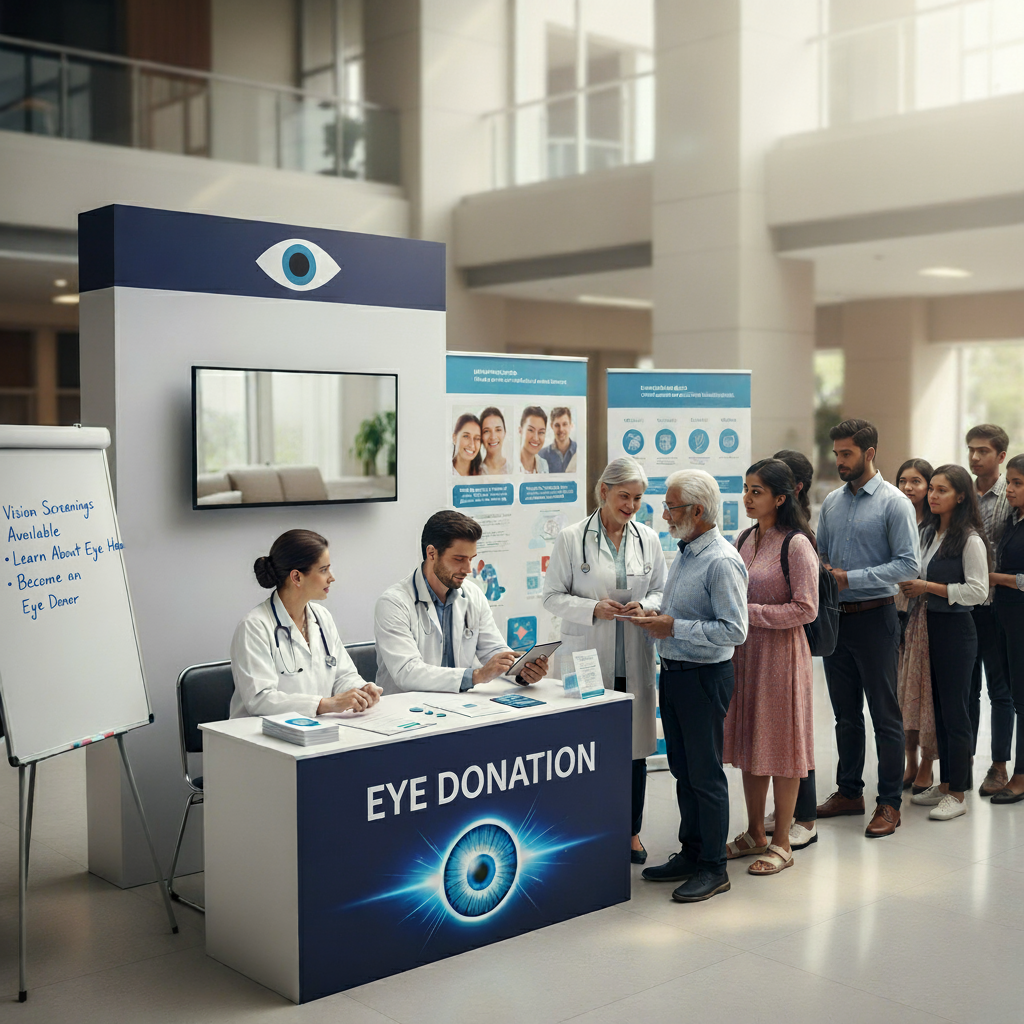
Place mobile booths at public gatherings like fairs, hospitals, colleges, and community centers. Offer on-the-spot registration with help from trained volunteers. It’s a simple but powerful way to collect pledges instantly. JJFIndia also enables online registrations, ensuring both physical and digital accessibility for donors.
7. Conduct myth-buster sessions
Misinformation is one of the biggest hurdles. Host open sessions, Q&As, and awareness talks where experts clarify myths about eye and organ donation. Use visuals and simple facts to dispel false beliefs. A transparent approach enhances trust and gives credibility to the initiative at every level.
8. Engage health professionals
Doctors, nurses, and optometrists hold great influence in shaping opinions. Encourage them to talk about donation during checkups or health camps. Their professional advice can comfort families and motivate pledges. Collaboration with healthcare workers adds authenticity and scientific backing to your awareness and outreach programs.
9. Follow up with pledgers
Once people make a pledge, don’t stop there. Send them gentle reminders, thank-you notes, and updates about upcoming events. Engaging pledgers regularly helps build a committed community of advocates. Regular communication keeps the spirit of the eye donation awareness campaign alive and ensures that pledges turn into real donations.
10. Measure impact and adjust
Track your campaign’s progress, count pledges, analyze feedback, and measure social engagement. Use data to refine your next steps. Continuous evaluation helps maintain both effectiveness and credibility. By monitoring results, you can ensure your organ and eye donation campaign stays transparent, efficient, and truly impactful in the long run.
FAQs
Q1: What exactly is an eye donation awareness campaign and why is it needed?
An eye donation awareness initiative helps educate people about the importance of donating their eyes after death. It clears misconceptions, teaches procedures, and encourages pledging. Such efforts are vital because awareness drives action. By informing the public, we can bridge the gap between the demand and availability of donor corneas in India.
Q2: Who can donate eyes or organs?
Almost everyone in good general health can donate. Age, gender, or social background does not usually restrict eligibility. Even people who wear glasses or have had certain eye surgeries may still qualify. The final medical decision rests with doctors or eye bank professionals who evaluate donor suitability at the time of donation.
Q3: Does donating eyes disfigure the body?
No, donating eyes does not disfigure the body in any way. Only the corneal tissue, which is transparent, is carefully removed by medical experts. The facial appearance remains natural and unaffected. Families can still hold traditional funeral rites, and the donor’s body is handled with utmost respect and dignity.
Q4: How soon must the eyes be collected after death?
Timing is crucial. Ideally, eyes should be collected within 4 to 8 hours after death to preserve the viability of corneal tissue. Most registered eye banks and hospitals, supported by JJF India, operate 24/7 to ensure timely collection, making every donation opportunity meaningful and life-changing for recipients in need.
Q5: Can I pledge for both at the same time?
Yes, absolutely! You can pledge for both organ and eye donation together through one unified form. Doing so maximizes your contribution and helps multiple recipients. JJFIndia provides a simple and secure registration process for combined pledges, making it easy to become a donor and inspire others around you.
Conclusion
In summary, an eye donation awareness campaign is a powerful way to bring the idea of giving sight into public consciousness. When designed carefully, with clear messaging, local champions, media use, myth-busting, and easy registration, it can significantly increase pledges. Because eye donation is part of broader organ donation efforts, boosting awareness in one area strengthens the larger ecosystem of giving. The work of JJFIndia demonstrates how organizational support, pledge systems, and public education can align to drive impact.
