



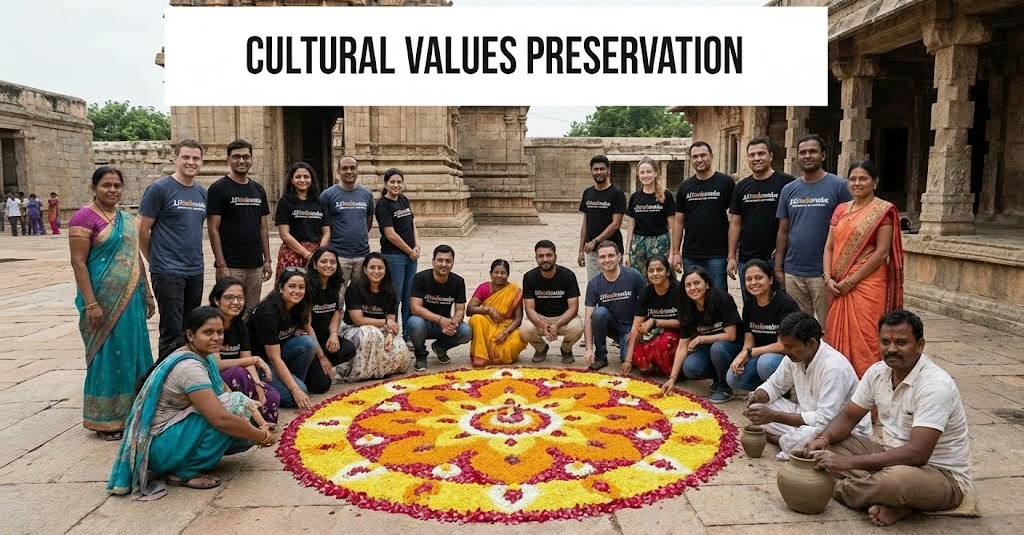
Cultural values preservation shapes how communities think, behave, and stay connected across generations. In a rapidly changing world, protecting shared beliefs, customs, and social ethics gives people a sense of belonging and continuity. This blog explores how communities can actively protect heritage, encourage participation, and strengthen identity through traditional values promotion and responsible initiatives led by JJFIndia.
Table of Contents
Cultural values preservation in Modern Society
Cultural identity is more than festivals or clothing. It includes language, social responsibility, respect for elders, and community cooperation, ensuring these practices remain meaningful instead of fading into history.
Organizations such as JJFIndia work to protect social traditions by encouraging structured community participation and awareness programs. Their efforts support traditional values promotion by connecting individuals with cultural education, social responsibility, and ethical development activities.
In India’s diverse society, shared values play a key role in unity and social harmony. When people actively engage in community-driven efforts, cultural continuity becomes a shared responsibility rather than an abstract idea.
The Role of Community Engagement
Strong communities are built on shared beliefs and actions. Cultural values preservation thrives when individuals participate in service-oriented activities that reflect social ethics and respect for heritage.
Through community awareness initiatives, JJF India encourages meaningful involvement that supports values-based living in everyday life. These efforts include educational drives, leadership development, and collaborative service that strengthen social bonds.
Active participation helps people understand why traditions matter and how they influence responsible citizenship. Values become practical when linked with real-world action rather than remaining theoretical.
Education as a Foundation for Values
- Education is a powerful tool for helping individuals understand history, ethics, and social responsibility from an early age. It also encourages critical thinking, empathy, and awareness of societal challenges, preparing students to make informed decisions while honoring cultural heritage.
- Teaching values early allows people to appreciate their roots and develop respect for cultural identity throughout life. This early exposure nurtures moral reasoning, strengthens community bonds, encourages ethical behavior, and ensures traditions are carried forward thoughtfully across generations.
- Programs supported by JJFIndia focus on awareness and skill-building, ensuring traditional values promotion aligns with modern education needs. These programs incorporate interactive learning, mentorship, and practical experiences, empowering youth to apply traditional principles in contemporary settings effectively.
- This balanced approach supports progress while maintaining respect for long-standing customs and social ethics. It allows communities to adapt to changing environments, embrace innovation responsibly, and preserve meaningful traditions that define collective identity and social cohesion.
- Integrating cultural education into community learning helps individuals gain clarity about identity and shared responsibilities. It strengthens communication, encourages collaboration across diverse groups, builds mutual understanding, and ensures cultural knowledge is actively practiced in daily life.
- Values-based education builds informed, respectful citizens who contribute positively to society. By reinforcing ethical decision-making, empathy, and civic engagement, it creates responsible individuals capable of fostering inclusive, supportive, and culturally aware communities.
Benefits of Leadership and Responsibility
- Strengthens trust and unity within communities by promoting ethical behavior and shared cultural responsibility at every organizational level.
- Inspires individuals to practice integrity and fairness in daily actions, reinforcing cultural principles through real-life leadership examples.
- Encourages socially accountable leadership that supports traditional values promotion and responsible decision-making within communities.
- Protects collective heritage and social harmony by motivating leaders to guide others with respect, empathy, and cultural awareness.
- Supports sustainable social growth while ensuring communities remain connected to their cultural roots and long-standing ethical values.
10 Pro Tips for Strengthening Cultural Values and Cultural Values Preservation
- Learn local history and traditions from credible community sources to understand cultural roots, shared values, and social practices passed through generations.
- Participate in cultural awareness programs regularly to strengthen understanding, encourage interaction, and keep traditions relevant within modern community life.
- Encourage youth involvement in heritage activities so younger generations appreciate cultural identity, develop respect, and feel responsible for preserving traditions.
- Practice respectful communication across generations to maintain harmony, share wisdom, and build stronger relationships based on mutual understanding.
- Support ethical leadership in community initiatives to promote fairness, accountability, and decision-making rooted in shared cultural principles.
- Use storytelling to pass values to younger members, helping them connect emotionally with traditions and understand lessons behind cultural practices.
- Volunteer for causes that reflect social responsibility to actively practice cultural ethics, support traditional values promotion, and contribute meaningfully to community well-being.
- Through initiatives guided by JJFIndia, communities can promote inclusivity while respecting traditions, creating balanced societies that honor diversity without weakening cultural identity.
- Align modern skills with cultural ethics to ensure progress supports traditional values rather than replacing or diminishing them.
- Reflect cultural values in daily personal behavior by practicing respect, responsibility, and integrity in everyday interactions and decisions.
FAQs
1. How does cultural values preservation benefit future generations?
It helps young people understand identity, social responsibilities, respect traditions, adapt to change, maintain continuity, and develop strong ethical decision-making skills through traditional values promotion.
2. Why is community participation essential?
Community participation builds shared responsibility, trust, cooperation, and mutual respect while transforming values into daily actions that support long-term social unity.
3. How can education support cultural awareness?
Education, as supported by JJFIndia, explains traditions clearly, connects ethics with modern learning, builds informed citizens, and prevents cultural values from being misunderstood or forgotten.
4. What role does leadership play?
Ethical leadership inspires responsibility, models fairness and integrity, guides communities through change, and protects harmony rooted in shared cultural principles.
5. How can individuals contribute daily?
Individuals contribute by practicing respect, supporting community initiatives, sharing knowledge, and consistently reflecting social and cultural values in everyday behavior.
Conclusion
Cultural values preservation remains essential in maintaining identity, unity, and ethical living in a changing society. Through education, leadership, and community engagement, traditions can thrive alongside progress. Initiatives led by JJFIndia show that when people actively participate, cultural values remain living practices rather than fading concepts. Protecting cultural values today ensures a balanced and meaningful future for generations to come.
