



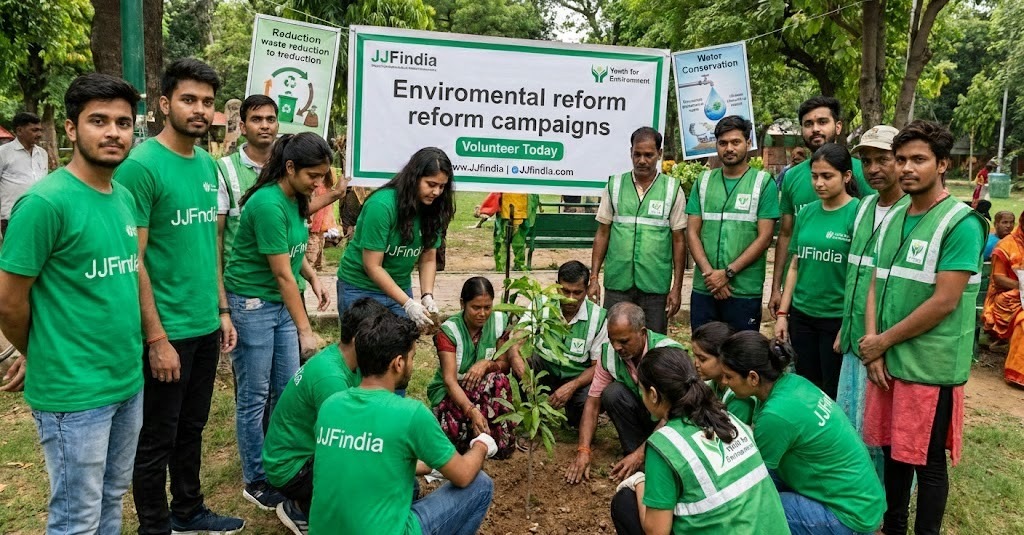
Environmental reform campaigns are becoming a powerful force in shaping how communities think, act, and respond to environmental challenges across India today. They are strongly guided by youth values, responsibility, fairness, and long-term thinking, supported through structured volunteering efforts highlighted by JJFindia, which encourage responsible participation, awareness, leadership development, community collaboration, skill-building, and sustainable environmental practices across diverse regions. By engaging citizens in meaningful activities, these initiatives foster a culture of accountability and empower individuals to take continuous action for a greener, healthier future.
Table of Contents
Why does environmental action matter in a changing world?
Environmental change is no longer a distant issue. It affects daily life through air quality, water availability, waste management, and climate patterns. Organized environmental efforts create awareness, encourage participation, and inspire collective responsibility. They translate complex environmental challenges into simple actions that people can easily follow and adopt.
These initiatives gain strength when they align with principles such as responsibility, fairness, and long-term thinking. Young people today are deeply concerned about sustainability and want opportunities to contribute meaningfully. When campaigns reflect these priorities, participation increases and impact becomes measurable.
Organizations working through structured volunteering systems, such as those described on JJFindia, show how organized action can convert concern into results. They make environmental service accessible, track contributions, and recognize volunteer efforts in transparent ways.
How do these initiatives connect with youth values?
They succeed when they speak the language of the younger generation. Young people prioritize ethics, transparency, and real-world impact rather than symbolic gestures. Initiatives that offer clear goals, visible outcomes, and learning opportunities resonate strongly.
Young volunteers often seek purpose along with skill development. By participating in tree drives, cleanliness missions, or awareness programs, they experience how their actions matter. This practical exposure strengthens environmental responsibility while encouraging personal growth.
Structured volunteer ecosystems, as outlined on JJFindia, help coordinate tasks, allow applications for causes, and provide recognition through points or certificates. Such systems make environmental engagement rewarding and organized without confusion.
The social impact of environmental reform campaigns in India
These efforts do more than protect nature. They influence social behavior, community cooperation, and civic responsibility. Clean surroundings improve public health, while conservation initiatives reduce long-term costs for society.
When youth values are embedded into these efforts, the impact multiplies. Young participants become ambassadors of change, spreading awareness within families, colleges, and workplaces. Over time, this creates a culture where sustainability is normal rather than optional.
Platforms explained on JJFindia aim to expand volunteering reach across India, ensuring that environmental service is not limited by location or background. This inclusive approach strengthens nationwide participation.
Building leadership through environmental action
- Participation in environmental reform campaigns nurtures leadership skills by helping volunteers learn planning, communication, and teamwork through real-world environmental challenges.
- These hands-on experiences align closely with youth values, which emphasize personal growth through action rather than theoretical learning.
- Young leaders emerging from environmental work often continue contributing to other social causes, expanding their impact beyond environmental initiatives.
- Their mindset gradually shifts from individual benefit to community well-being, creating responsible and socially aware citizens.
- This positive ripple effect supports long-term environmental reform and sustained community development.
- As shared on JJFindia, structured volunteering systems document service hours and achievements for transparency.
- Tracking contributions helps volunteers build credible profiles while staying motivated and engaged in meaningful service.
10 Pro Tips for participating effectively
- Choose causes that genuinely reflect your youth values and personal interests, ensuring long-term commitment, emotional connection, and meaningful participation in environmental initiatives.
- Start small and remain consistent rather than taking on too much at once, allowing sustainable involvement without burnout or loss of motivation.
- Learn the environmental issue before joining an activity, as proper knowledge improves impact, decision-making, and responsible action within communities.
- Work in teams to share ideas and responsibilities effectively, encouraging collaboration, diverse perspectives, and stronger outcomes through collective effort.
- Track your contributions to stay motivated and accountable, helping you measure progress, recognize growth, and maintain consistent involvement.
- Use digital tools wisely to coordinate schedules and tasks, improving communication, organization, and efficiency among volunteers and project leaders.
- Respect local communities and involve them in decision-making, ensuring initiatives remain culturally sensitive, practical, and widely accepted.
- Focus on long-term solutions instead of one-time actions, creating sustainable environmental benefits that continue beyond short-term campaigns.
- Share learnings responsibly to inspire others without exaggeration, building trust, awareness, and realistic expectations about environmental efforts.
- Reflect on experiences to strengthen commitment and refine your approach, allowing personal growth and improved effectiveness in future initiatives.
The future of environmental reform campaigns
Looking ahead, such initiatives will play a central role in shaping sustainable development. As environmental challenges grow, so does the need for informed, motivated citizens who are ready to take responsibility.
This alignment ensures continuity. When young people see environmental service as meaningful and rewarding, participation becomes a habit rather than a requirement. Structured systems, such as those outlined on JJFindia, help maintain this momentum by making service organized and transparent.
FAQs
1. How do environmental reform campaigns influence young minds?
These initiatives simplify complex environmental issues and turn them into clear, practical actions. They offer hands-on exposure instead of only theoretical learning, helping young people understand real impact. Visible community outcomes strengthen a sense of responsibility and ownership. This approach aligns naturally with youth values and long-term thinking.
2. Why do young people feel drawn to environmental work?
Young people are drawn to environmental work because these issues directly affect their future. Participation provides a sense of purpose beyond daily routines and academic tasks. It enables learning through real-world experiences rather than textbooks alone. Over time, this involvement builds confidence and social responsibility.
3. What skills can be gained from volunteering?
Volunteering helps improve communication skills through regular teamwork and collaboration. Planning and organizational abilities develop while managing activities and timelines. Problem-solving becomes more practical when facing real challenges. Leadership confidence grows as individuals take responsibility for outcomes.
4. How does organized volunteering increase impact?
Organized volunteering increases impact by clearly defining tasks and reducing confusion. Tracking progress helps volunteers stay motivated and focused on goals. Recognition encourages continued involvement and commitment. Proper coordination ensures that efforts are efficient and not repeated unnecessarily.
5. Can environmental service shape career paths?
Environmental service can positively shape career paths by building transferable professional skills. It demonstrates commitment, discipline, and reliability to future employers. Participation also helps create strong community and professional networks, as outlined through structured volunteering models shared on JJFindia, aligning personal growth with meaningful social contribution.
Conclusion
Environmental reform campaigns are essential for building a sustainable and responsible society. They translate awareness into action and connect deeply with principles such as accountability, fairness, and long-term vision. Through organized and accessible systems highlighted on JJFindia, young people engage in meaningful tasks that create lasting environmental and social impact. When awareness, action, and shared responsibility work together, positive change becomes achievable and sustainable for future generations.
