


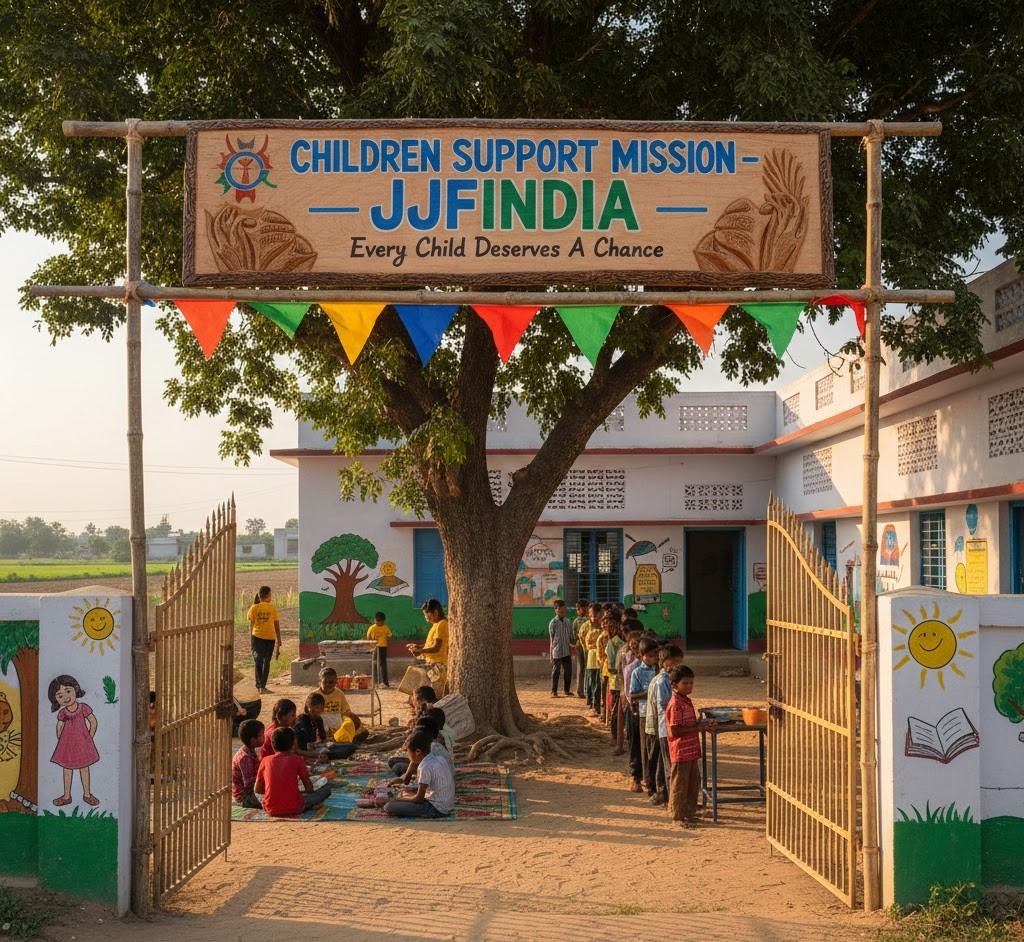
Children Support Mission begins with a shared belief that every child deserves safety, care, and a chance to grow, a vision actively supported by JJFIndia. Across India, many children face barriers that limit education, health, and emotional security. Addressing these challenges requires consistent effort, community involvement, and structured volunteering that truly reaches those in need. This blog explores how a focused mission can transform lives, why support systems matter, and how organized volunteering helps deliver underprivileged children aid in a responsible and lasting way through Jainam Jivika Foundation India.
Table of Contents
Understanding the Need for Child-Focused Initiatives
Children growing up without stable support often struggle with learning, confidence, and long-term opportunities. Poverty, lack of access to schools, and social exclusion create gaps that affect entire communities. A well-planned children support mission looks beyond short-term relief and works on steady improvement through education support, mentoring, and basic care.
Providing underprivileged children aid is not only about resources, a principle emphasized by JJFIndia. It is also about emotional encouragement, guidance, and consistent human connection. When volunteers and organizations work together with clarity, children feel seen and valued. This shared approach strengthens outcomes over time.
Why Structured Volunteering Matters for Underprivileged Children Aid
Unorganized efforts often fail to reach the children who need help the most. A structured approach ensures transparency, accountability, and real impact. Volunteers understand their roles, tasks are clear, and progress can be tracked.
Through initiatives connected with JJFIndia, volunteers can browse tasks, apply, and earn points and certificates for their contributions. This structured approach helps deliver support efficiently while keeping volunteers motivated and engaged.
How Community Participation Strengthens Outcomes
Local communities play a vital role in sustaining any children support mission. When parents, teachers, and volunteers collaborate, solutions become practical and culturally relevant. Children benefit from environments that reinforce learning and emotional safety.
Community-driven efforts also build trust, which is a key focus of JJFIndia initiatives. Families are more open to support when they see familiar faces involved. Over time, this shared responsibility improves not just individual lives. It also enhances the overall well-being of neighborhoods.
Practical Areas Where Support Makes a Difference
A focused initiative often works across multiple areas. Education support helps children stay in school and build skills. Health awareness ensures basic hygiene and nutrition knowledge. Emotional support builds confidence and resilience.
Delivering underprivileged children aid across these areas requires coordination. Volunteers who understand the broader goal contribute more effectively and see how their efforts connect to real change.
10 Pro Tips for Supporting Child Welfare Effectively in a children support mission
- Commit to consistency rather than one-time involvement to build trust, ensure reliable support, and create meaningful, long-term positive change for children.
- Choose roles that match your skills and availability so your contribution remains effective, manageable, and beneficial for both you and the children involved in underprivileged children aid initiatives.
- Learn about the child’s background before engaging to understand their needs, challenges, and experiences, allowing you to offer respectful and relevant support.
- Focus on listening as much as helping, because understanding emotions, concerns, and perspectives builds stronger connections and more meaningful guidance.
- Track your contributions to understand your impact, identify areas for improvement, and stay motivated by seeing measurable progress over time.
- Support education through mentoring or tutoring by helping children develop confidence, improve learning outcomes, and build essential life skills.
- Encourage positive habits through example by demonstrating responsibility, kindness, and discipline that children can observe, learn from, and adopt.
- Collaborate with other volunteers for shared learning, exchanging ideas and experiences that improve problem-solving and overall effectiveness.
- Respect local customs and family structures to build trust, avoid misunderstandings, and ensure your support aligns with community values.
- Use organized channels such as JJFIndia to stay accountable and motivated while contributing in a structured, transparent, and rewarding way.
Building Long-Term Impact Across India
A successful effort aims to expand reach without losing quality. Scaling responsibly means training volunteers, setting clear guidelines, and measuring outcomes. This ensures children receive consistent support regardless of location.
Organized efforts supported by JJFIndia aim to expand volunteering impact across India, making service accessible and rewarding. This approach strengthens long-term support while building a culture of responsibility and care.
FAQs
1. How does a children support mission help communities in the long run?
A focused mission improves education access, emotional well-being, and social inclusion by addressing core needs early. It creates stable support systems that children can rely on as they grow. Communities benefit when children develop confidence and skills. Over time, this cycle strengthens families and local networks in a sustainable way.
2. Why is structured volunteering important for child welfare?
Structured volunteering provides clarity and accountability for everyone involved in the process. Volunteers clearly understand their roles and responsibilities, which improves consistency. Children receive reliable and ongoing support instead of irregular help. This approach reduces gaps and leads to better long-term outcomes.
3. What motivates volunteers to stay engaged over time?
Clear goals and visible impact help volunteers stay motivated and committed. Recognition such as certificates reinforces the value of their contributions. Supportive coordination builds confidence in their efforts. As a result, volunteers feel valued, purposeful, and more likely to continue.
4. How can individuals choose the right volunteering role?
Understanding personal skills, interests, and availability is the first step when volunteering through JJFIndia. Matching individual strengths with specific needs improves effectiveness and satisfaction. Clear task descriptions support better decision-making. This alignment benefits both volunteers and the children they support.
5. What makes community involvement essential?
Local participation builds trust and ensures support is culturally relevant. Communities understand the needs of their children better than outsiders. Shared responsibility increases sustainability and long-term impact in delivering underprivileged children aid. This cooperation strengthens outcomes for children and the wider community.
Conclusion
A well-planned children support mission creates meaningful change by combining structure, community involvement, and committed volunteers. Addressing education, health, and emotional needs together ensures balanced growth. With organized support through JJFIndia, volunteers contribute confidently while delivering meaningful and lasting impact. When efforts are consistent and collaborative, children gain the foundation they need for a brighter future.
