


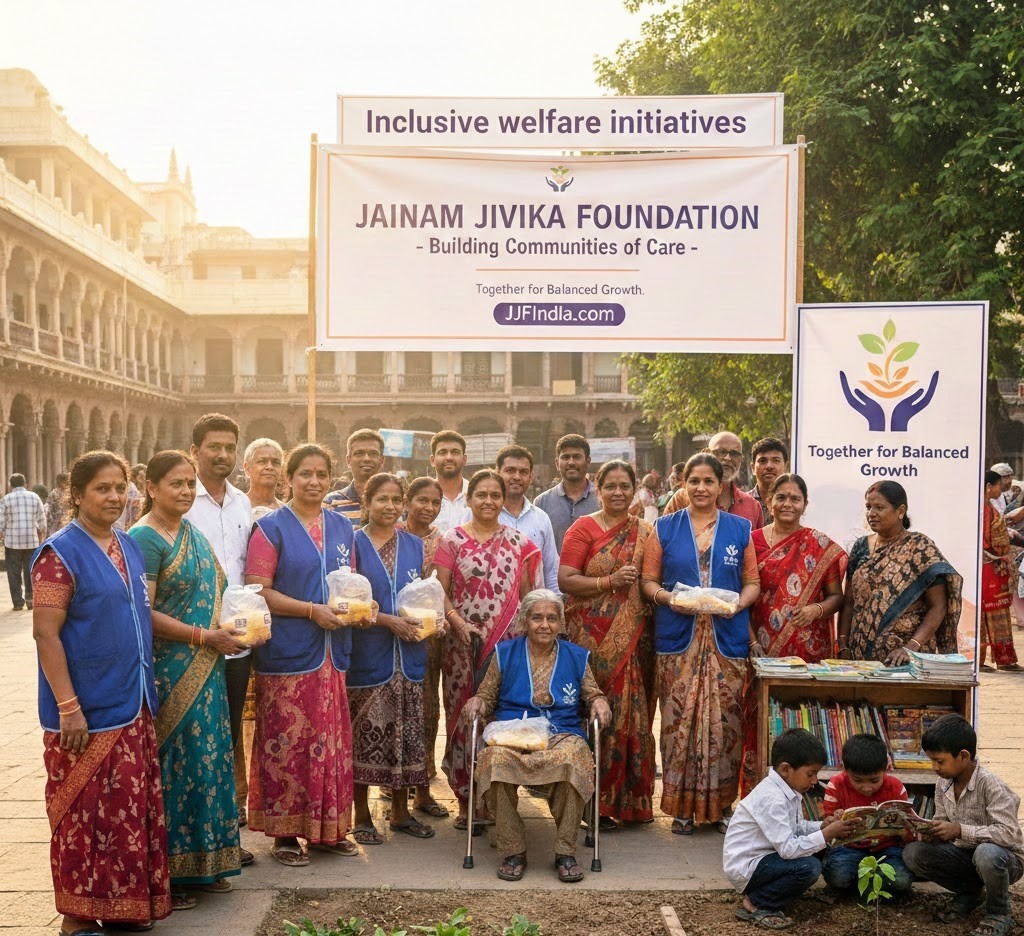
Inclusive welfare initiatives are essential for building communities where care, dignity, and shared responsibility guide progress. These efforts matter because they address real social gaps while strengthening trust and participation at the local level. When people work together through structured service, communities become more stable and compassionate. Such work reflects the values promoted by equal opportunity foundations that aim to create balanced growth for everyone. Jainam Jivika Foundation connects service with purpose by focusing on long-term community wellbeing through meaningful action shared on JJFIndia.
Table of Contents
About Jainam Jivika Foundation
Jainam Jivika Foundation is a social service organization guided by the principle of seva and responsible community action. The foundation focuses on practical welfare efforts that respect dignity and encourage participation. Its work supports vulnerable groups while promoting shared responsibility among citizens. This approach aligns with the broader goals seen in equal opportunity foundations that value fairness and inclusion. More details about this mission can be explored at JJFIndia.
Inclusive welfare initiatives and Community-Centered Action
Such efforts focus on reaching people who are often overlooked and ensuring that support systems remain accessible and respectful. They emphasize listening, participation, and ethical service delivery. When welfare efforts include community voices, outcomes become more effective and sustainable. These values promote fairness without dependency, helping communities grow stronger over time.
Why This Cause Matters
Social welfare plays a key role in reducing inequality and supporting human dignity. These efforts help individuals access basic support while encouraging independence and self-worth. They reduce social gaps by focusing on participation rather than charity alone. This approach benefits society as a whole by creating shared responsibility and resilience.
JJF Initiative
- Programs are designed around real community needs through careful planning and ethical service.
- Inclusive welfare initiatives focus on care, education, and community support delivered with transparency.
- These initiatives help individuals regain stability while remaining connected to their communities.
- The foundation promotes fairness and access in ways aligned with equal opportunity foundations.
- Ongoing initiatives and community efforts are shared through JJFIndia for public awareness and participation.
Role of Volunteers and Community
Volunteers play a vital role in turning welfare goals into practical outcomes. Their time, skills, and commitment strengthen service delivery and build trust. Community participation ensures that initiatives remain relevant and respectful. This shared effort mirrors the philosophy of equal opportunity foundations that value collective action. JJF encourages responsible volunteering through clearly defined roles shared via JJFIndia.
How You Can Get Involved
Individuals can support social welfare by volunteering, contributing resources, or spreading awareness. Meaningful involvement begins with understanding community needs and committing time responsibly. Supporting structured initiatives ensures that efforts create real impact. This type of engagement aligns with efforts focused on sustainable and positive change. Opportunities to contribute are regularly shared on JJFIndia.
10 Pro Tips for Meaningful Welfare Engagement Through Inclusive Welfare Initiatives
- Learn about community needs before offering support by listening carefully, understanding local challenges, and respecting existing efforts. This ensures that help remains relevant, meaningful, and aligned with real priorities.
- Commit time consistently rather than occasionally to build trust and reliability within the community. Regular involvement allows volunteers to understand issues deeply and contribute to lasting, positive change.
- Respect local voices and lived experiences by valuing community knowledge and perspectives. Effective welfare work depends on listening first, collaborating openly, and avoiding assumptions.
- Support structured programs instead of unplanned aid to ensure resources are used responsibly. Organized initiatives provide clear goals, accountability, and long-term benefits.
- Share skills that add long-term value, such as planning, teaching, or coordination. Skill-based contributions strengthen programs and help communities become more self-reliant.
- Work collaboratively with other volunteers to enhance coordination and reduce duplication of efforts. Teamwork improves problem-solving and creates a supportive service environment.
- Follow ethical guidelines in service delivery to protect dignity, fairness, and transparency. Ethical conduct builds trust and ensures welfare efforts remain respectful and responsible.
- Impact should be measured through outcomes rather than numbers, focusing on real improvements in people’s lives. Meaningful progress matters more than activity counts, a principle often emphasized by equal opportunity foundations that prioritize lasting change.
- Encourage participation from beneficiaries by involving them in planning and decision-making. Participation builds confidence, ownership, and relevance.
- Stay informed through updates from JJFIndia to understand initiatives, opportunities, and impact stories. Staying connected helps volunteers remain engaged and effective.
FAQs
1. How do inclusive welfare initiatives support community well-being?
Community wellbeing improves when social needs are addressed through planned and respectful action. Active participation from both volunteers and beneficiaries creates shared ownership and trust. A focus on long-term stability rather than short-term relief leads to lasting impact. As a result, communities grow stronger through cooperation and shared responsibility.
2. Why is community participation important in welfare programs?
Community participation is important because it ensures welfare programs reflect real and local needs. It helps build trust between service providers and community members. Participation also improves accountability and transparency in implementation. Over time, this approach supports sustainable and meaningful outcomes.
3. How does volunteering contribute to social welfare?
Volunteering contributes to social welfare by adding skills, time, and human connection to initiatives. It strengthens service quality and expands outreach efforts. Volunteers also promote empathy and civic responsibility within communities. Their involvement supports organized and effective welfare efforts.
4. What makes a welfare initiative sustainable?
A welfare initiative becomes sustainable when it is guided by clear goals and long-term planning. Community involvement ensures that programs remain relevant and responsive. Ethical practices help maintain trust and respect. Consistent evaluation allows initiatives to improve and adapt over time.
5. How can individuals support welfare causes responsibly?
Individuals can support welfare causes responsibly by volunteering with commitment and consistency. They can also support structured and well-planned programs that reflect the values upheld by equal opportunity foundations. Spreading awareness thoughtfully helps reach more people. Staying informed and engaged strengthens long-term impact.
Conclusion
Social progress depends on thoughtful service and shared responsibility. Inclusive welfare initiatives guided by values, participation, and planning create meaningful impact. Jainam Jivika Foundation demonstrates how ethical action and community involvement can improve lives. By supporting structured efforts and staying engaged, individuals help build stronger and fairer communities. This collective approach reflects a long-term vision of responsible service and shared commitment, as communicated through JJFIndia.
