


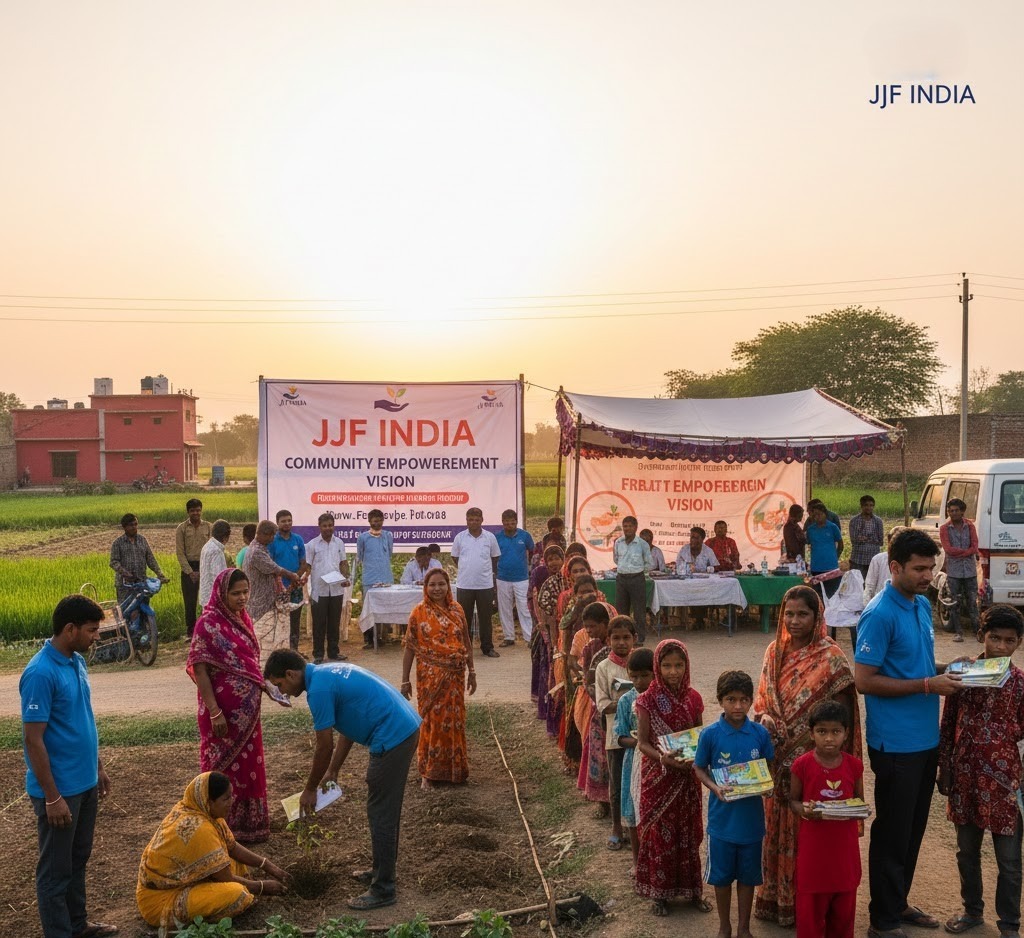
The community empowerment vision is at the heart of meaningful social change, beginning with real people working together to improve lives for everyone. Built on compassion and responsibility, JJFIndia supports health, education, environmental awareness, and volunteer engagement across the country, strengthening efforts focused on empowering local communities. We also share actionable tips and answer common questions, explaining how this work truly happens.
Table of Contents
What Does the Community Empowerment Vision Mean?
The concept refers to a long‑term outlook that focuses on enabling individuals and groups to make decisions, solve problems, and control resources in their own lives. It goes beyond charity or short‑term fixes. Instead, it aims at empowering local communities by helping them build skills, confidence, and leadership.
A strong approach encourages communities to be active partners in deciding what changes are needed and how best to achieve them. When done well, this results in sustainable improvements that people value and maintain long after outside organizations leave, as supported by JJFIndia.
How JJF India Embodies It
- People‑Focused Mission
JJF India’s mission centers on compassion, volunteer engagement, health support, and education, all of which align with a community empowerment vision that puts people first. Its initiatives help individuals develop through collective action and community participation, empowering local communities in the process. - Grassroots Engagement and Action
By mobilizing volunteers across regions, JJFIndia builds connections between people, local organizations, and resources. This approach ensures that the foundation’s work truly reflects the needs of the people it serves. Through these efforts, JJF India supports efforts to tackle issues like healthcare, awareness, and resilience. - Real Impact Stories
Examples like successful blood donation drives organized by JJF India in collaboration with partners show how collective volunteering can save lives and bring communities together with purpose and hope.
Why It Matters for Social Change
A genuine approach makes change last by building people’s capacity to lead, make decisions, and sustain development independently, a principle consistently reflected in the initiatives carried out by JJFIndia.
It fosters local decision-making, creates volunteer networks, and transforms people from passive recipients into active, resilient changemakers collaborating toward shared goals.
Key Elements of Success in empowering local communities
- Participation: Involving community members actively in planning, decisions, and project implementation ensures ownership.
- Capacity Building: Providing training, education, and resources equips people to act confidently.
- Leadership Development: Encouraging emerging leaders within communities strengthens local decision-making and future sustainability.
- Sustainability: Creating projects that continue effectively without relying on constant external support.
- Strengthening Communication: Enhancing communication between organizations, volunteers, and residents improves collaboration and results.
Challenges in Implementing
- Limited resources can slow progress, reduce efficiency, and restrict community development initiatives.
- Miscommunication between different stakeholders can create confusion and hinder collaborative efforts.
- Cultural and socioeconomic barriers may affect participation, engagement, and project outcomes.
- Sustaining momentum after initial enthusiasm can be difficult without consistent support.
10 Pro Tips to Drive community empowerment vision
- Engage Early: This approach builds trust, encourages participation, and ensures solutions are practical, inclusive, and effective in empowering local communities over time.
- Build Trust: Foster trust through clear, honest communication, transparency, and consistent follow-up with all stakeholders during every stage of community initiatives, an approach strongly emphasized by JJFIndia.
- Provide Skills Training: Offer structured workshops and hands-on learning opportunities that help community members gain knowledge, confidence, and practical abilities for meaningful contributions.
- Encourage Participation: Actively invite local members to lead activities, share ideas, and take responsibility for outcomes to strengthen ownership and accountability within the community.
- Leverage Local Strengths: Identify existing talents, skills, and resources within communities and use them strategically to build sustainable, effective programs and initiatives.
- Collaborate Broadly: Work closely with local volunteers, NGOs, institutions, and other stakeholders to expand reach, combine expertise, and maximize community impact effectively.
- Measure Impact: Track progress consistently, celebrate milestones, and provide feedback so volunteers and community members stay motivated, engaged, and inspired to continue efforts.
- Promote Leadership: Support young and emerging leaders through mentorship, guidance, and delegation of responsibility, ensuring they can take initiatives independently and sustainably.
- Adapt and Improve: Gather regular feedback, analyze results, and make iterative improvements to programs to meet evolving community needs efficiently and responsibly.
- Share Stories: Publicize positive outcomes, success stories, and achievements to inspire others, encourage wider participation, and maintain momentum for future community projects.
FAQs
1. What is the community empowerment vision, and why is it important?
It means enabling people to shape their own futures by building capacity, leadership, and decision‑making power. It is important because it leads to solutions that communities value and sustain over time. With this approach, people stop waiting for help and become active change drivers.
2. How can individuals contribute to community development?
Individuals can contribute by volunteering, listening to community needs, sharing skills, and supporting local initiatives. Small actions such as awareness campaigns or educational activities create meaningful impact over time, a belief encouraged by JJFIndia.
3. What role do volunteers play in social initiatives?
Volunteers play a vital role by bringing energy, diverse skills, and local insight to initiatives. They help bridge gaps between organizations and residents, support project implementation, and inspire wider participation. Their involvement builds trust, shared ownership, and long-term impact while empowering local communities to lead change themselves.
4. How does education support community progress?
Education equips people with the knowledge, skills, and confidence needed to make informed decisions and solve problems. It increases opportunities for employment, raises awareness of health and rights, and builds stronger local leadership. Education empowers families and future generations.
5. Why is sustainable development important for communities?
Sustainable development ensures that progress does not compromise resources or opportunities for future generations. It balances economic, social, and environmental needs while encouraging communities to plan for long‑term well-being. Sustainable efforts create lasting impact beyond immediate projects.
Conclusion
A powerful community empowerment vision is essential for transforming societies from within. When organizations and individuals work together, real and lasting change happens. Through meaningful participation, capacity building, and collaborative action, communities can take charge of their future. It is a living goal that organizations JJFIndia bring to life through compassion, volunteer engagement, and purposeful initiatives.
