


Mental well-being activities are not trends. They are practical habits that lift your mood, lower stress, and strengthen overall health. When we talk about community health wellness, we look at how people support each other and grow together as a group.
Jainam Jivika Foundation is a social organisation that works for selfless service and community welfare. The foundation focuses on creating awareness, driving action, and involving people in meaningful work. Through different initiatives, JJF helps address important social issues and gives individuals a clear path to contribute to positive change.
Table of Contents
What are mental well-being activities?
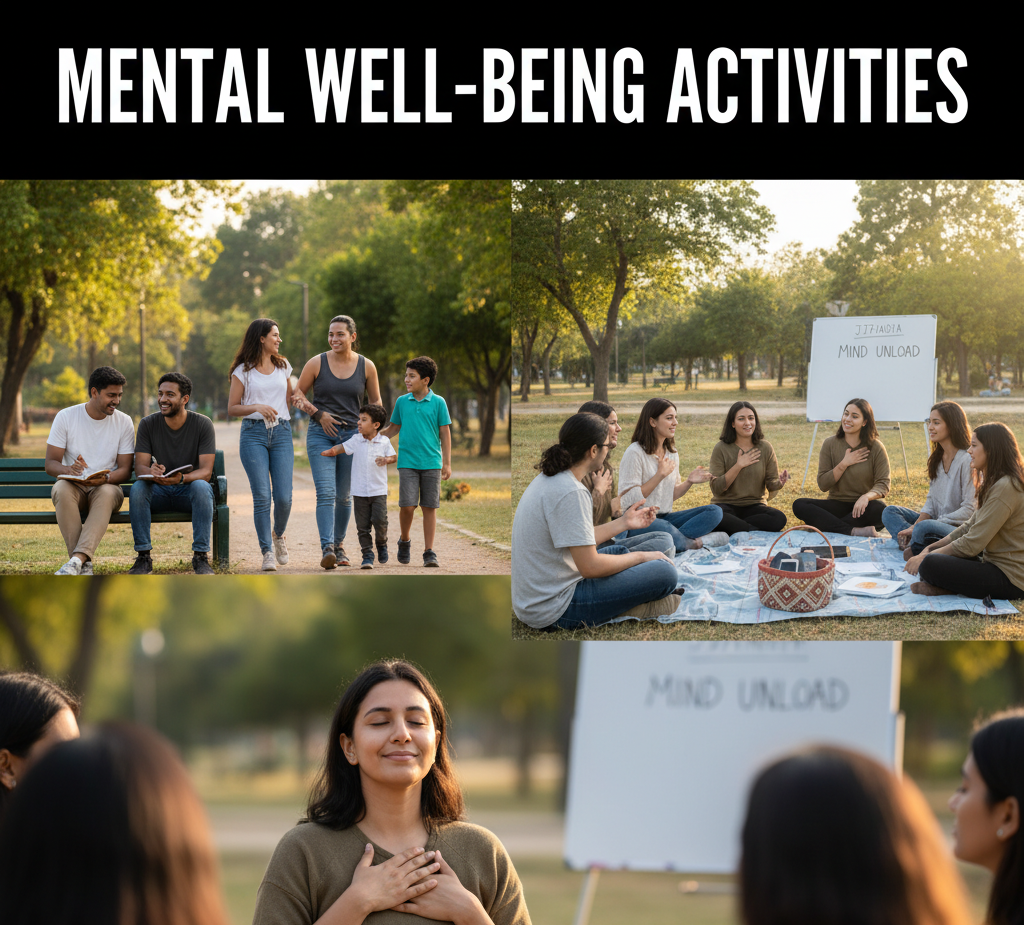
These are exercises, habits, or practices that help stabilize your emotional state, build resilience, and foster a sense of inner calm. Examples include mindfulness sessions, breathing exercises, journaling, community gatherings, or simply taking time for yourself. The team at JJFIndia tells us that one of their initiatives, “Mind Unload,” is specifically designed to support mental well-being and strengthen community health wellness through stress-relief activities.
Why self-care and mindfulness matter for community health wellness
- They prevent burnout and emotional exhaustion, which means fewer people in a community feel isolated or overwhelmed.
- They foster connection: when you take part in or lead such practices, you model healthy behaviors and encourage others.
- They support resilience: a community practicing wellness together becomes stronger in facing collective challenges.
- They reduce stigma: by openly talking about mental health and engaging in mindful habits, we normalize the topic and make it easier for people to seek help.
- As JJFIndia highlights, when a community focuses on health awareness, mental wellness, and cultural support, the whole network benefits.
Effective mental well-being activities to try today
- Mindful breathing for 5 minutes
Sit comfortably, close your eyes, and focus on your breath. Try inhaling slowly for a count of 4, holding for 2, and exhaling for 6. Repeat for five minutes. This simple mental well-being activity helps calm your nervous system and set a tone of ease in whatever you do next. - Gratitude journaling
Write down three things you are grateful for at the end of each day. This mental well-being activity shifts your focus away from stress and onto what’s going well. It also helps promote community health wellness when you share your gratitude with others. - Short community walk or meet-up
Connect with a neighbor, friend, or coworker and go for a 20-minute walk. Use that time to chat, laugh, and breathe fresh air. This counts as a wellness practice and strengthens social ties. - Digital detox for 30 minutes
Turn off your phone, log off social media, and step away from screens. Use this time for reading, drawing, cooking, or simply relaxing. This self-care habit helps reduce overstimulation and fosters calm, because calmer individuals create calmer environments. - Mind-unload or guided session
Join a structured session like the “Mind Unload” one mentioned by JJFIndia to relieve stress, talk, listen, and practice mindfulness. These guided sessions are designed to build resilience and emotional balance while helping participants reconnect with themselves and their surroundings.
10 Pro Tips for launching mental well-being activities
- Start small and consistent
Pick one wellness practice for just 5 minutes per day. Consistency beats intensity. A small habit strengthens your wellness foundation and models sustainability for others. - Schedule in advance
Block a time in your calendar for your routine. Treat it as you would an important meeting. That commitment helps you show up reliably, and others around you notice that you value self-care. - Invite a friend or neighbor.
Turning a wellness habit into a shared experience makes it more fun and increases follow-through. Sharing improves your sense of connection and helps foster a more positive environment. - Mix active and restful
Combine a physical aspect (like a walk or stretch) with a restful one (like journaling or meditation). This balance of motion and stillness offers deeper benefits by supporting both body and mind. - Create a calm environment
Choose a space that’s comfortable and free of clutter and distractions when you practice. The more inviting the place, the more likely you’ll use it. A calm setting shows that mental care is valued, and JJFIndia encourages individuals and communities to create such mindful environments that nurture overall well-being. - Track your progress
Keep a simple log of what you did, how you felt afterward, and any changes you noticed. Reviewing this helps you stay motivated and track your personal progress. - Celebrate small wins
When you complete a week of wellness practices, reward yourself, maybe with a healthy treat or a small celebration. Recognizing progress reinforces the habit and reminds you that your well-being matters. - Adjust when needed
If a particular routine isn’t working (you’re bored, too busy, or not benefiting), tweak it. Changing the time, duration, or type is fine. The focus is regular action. This flexibility helps you stay consistent and engaged. - Share your journey
Talk about your self-care or mindfulness habits with friends, family, or community groups even if it’s just saying, “I’m trying this new breathing exercise.” Talking normalizes the practice and strengthens community health wellness by encouraging others. - Link into a broader community initiative
Use your self-care routine as an anchor for shared well-being. Invite local groups, schools, workplaces, or neighborhoods to join you. When you act together, your impact multiplies, and your own practice feels more meaningful.
FAQs
Q1: What kind of mental well-being activities work best for beginners?
For beginners, simple and gentle approaches often work best, things like five minutes of mindful breathing, a short gratitude journal, or a walk with a friend. Starting small helps you build confidence and form sustainable habits. Over time you can add longer or deeper activities. The key is consistency, not perfection.
Q2: How can I encourage my workplace to support health and wellness?
You can suggest short group breaks for mindfulness or walking sessions, share articles or tips from JJFIndia around mental wellness, and propose casual “wellness check-ins” among colleagues. Building small routines makes a big difference in workplace culture. Support from leaders helps too.
Q3: How do these practices benefit children or teens?
Children and teens benefit from these habits by learning emotional regulation, stress management, and social connection early on. Simple practices like guided breathing or sharing feelings in a safe space reduce anxiety. When a community values wellness, young people grow up with healthier habits.
Q4: Can I combine physical fitness with self-care or mindfulness practices?
Yes, combining physical fitness with mindful or reflective practices is very effective. For example, a leisurely run followed by five minutes of mindful breathing or yoga with journaling. Exercise releases endorphins, and the follow-up mental activity helps stabilize mood and support community health wellness. Together they build stronger health foundations.
Q5: How do I measure the impact of my efforts on my community?
Measuring impact can be subtle, but you can track things like how many people joined you, how often you did activities, and informal feedback (“I feel less stressed,” “Our team feels closer”). You might notice fewer conflicts, better collaboration, or stronger support in your group.
Conclusion
In this blog, we explored how mental well-being activities and wellness practices are not just personal habits but powerful tools for creating a healthier, more connected community. JJFIndia highlight how simple acts of mindfulness and emotional care can create ripples of positive change across neighborhoods and workplaces. Remember: starting small, being consistent, and inviting others to join you magnifies both your personal benefits and the collective ripple effect. Embrace these practices, link them to your own circle, and watch how greater calm, connection, and balance flow from you outward.
