



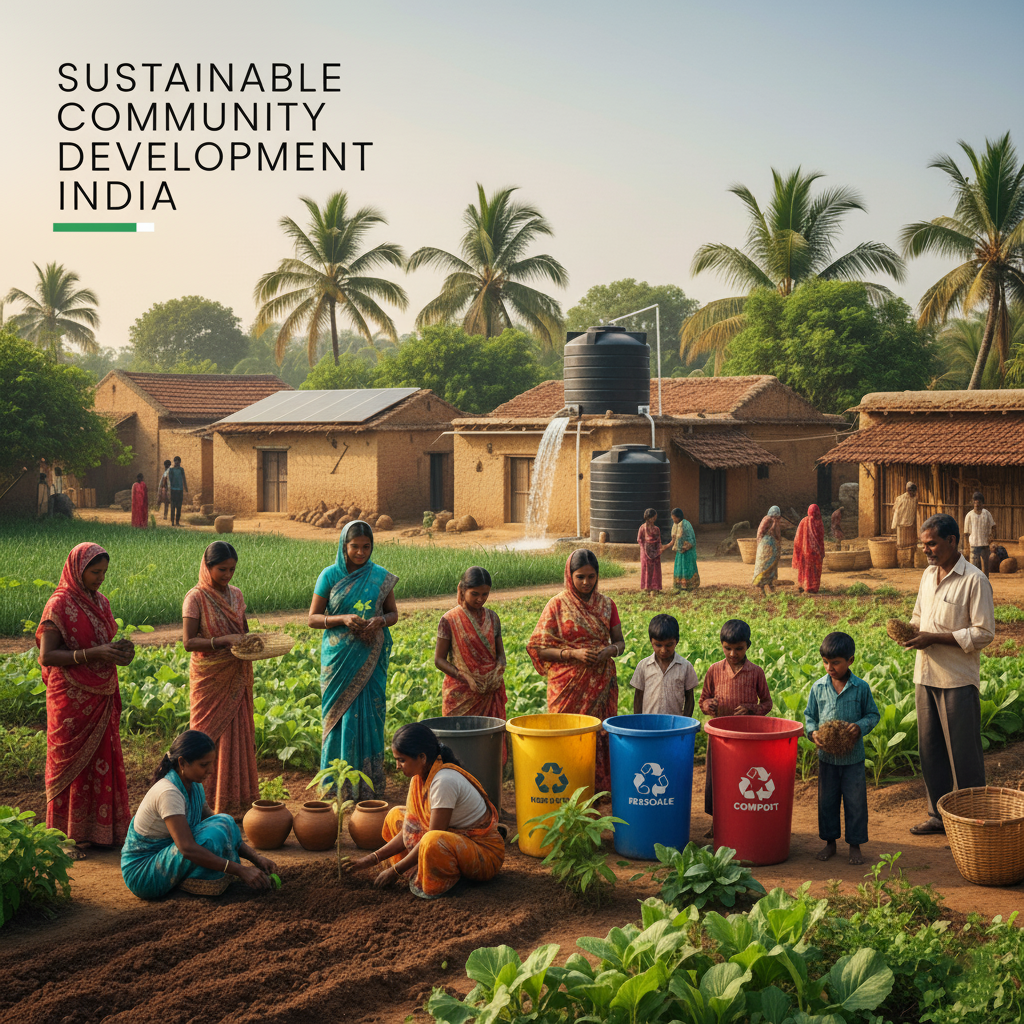
Sustainable community development India is about creating communities that thrive socially, economically, and environmentally for the long term. In India, with its unique cultural, geographic, and economic diversity, crafting such development means embracing native traditions, empowering local leadership, and making future-focused choices. One organization that is at the heart of this movement is Jainam Jivika Foundation (JJF), which you can explore at JJFIndia. They bring together local voices, eco-friendly community programs, and strong partnerships to drive meaningful change.
Table of Contents
What is sustainable community development India
When we talk about community development, we’re referring to efforts that support health, education, livelihoods, and the environment in Indian communities, so they don’t just survive but flourish in a balanced way. Sustainability here means:
- Meeting today’s community needs without compromising tomorrow’s opportunities
- Building systems where local people lead, rather than relying solely on outside experts
- Weaving ecological care into social and economic progress
A strong piece of this is launching and managing eco-friendly community programs, which serve as concrete avenues for change.
How do eco-friendly community programs tie in?
By embedding these initiatives into broader community development, you ensure that environmental concerns aren’t an add-on but a core part of the plan. Whether it’s waste management, tree planting, rainwater harvesting, or sustainable livelihoods, these efforts help communities become resilient, responsible, and forward-looking.
Why prioritize sustainable community development now?
- India’s rapid urbanization and rural transformation mean traditional supports are stretched; sustainable systems help fill those gaps.
- Environmental stresses (water, waste, and land use) require long-term thinking, these initiatives contribute to solutions.
- Communities with strong internal networks, sustainable livelihoods, and environmentally aware practices are better placed to face shocks, economic, health, or climatic.
- JJF show that local action matters: when community members engage, development stays rooted, inclusive, and lasting.
Key pillars of sustainable community development India
- Community participation & leadership: Engagement of local people ensures relevance, ownership, and sustainability.
- Environmental stewardship: through actions like waste reduction, green energy, and tree planting.
- Economic empowerment: Enabling livelihoods, skills, and local enterprises.
- Monitoring, feedback, adaptation: Sustaining means being able to adjust as needs change.
10 Pro Tips for implementing sustainable community development India
Here are ten actionable tips to kick-start or scale your efforts:
- Map community assets and needs
Start by listing what the community already has (skills, spaces, traditions) and what it needs. This ensures your initiatives align with local realities. - Form a local steering group
Create a representative group of community members who guide the process. This fosters ownership of eco-friendly community programs and strengthens local development efforts. - Pilot small-scale projects.
Begin with manageable projects, like a local tree-planting drive or a waste-segregation awareness campaign. Small successes build momentum for scaling up. - Integrate training and livelihood links
Link your green programs to income-generating activities, e.g., composting leading to the sale of soil nutrients. This ensures financial viability. - Use local materials and knowledge
Leverage local building materials, cultural practices, and indigenous wisdom. This respects community identity and supports environmentally sound practices. - Ensure transparent monitoring and celebrate wins
Show progress publicly, photos, community meetings, recognition. Celebrate every milestone of your initiatives to encourage wider participation. - Partner with credible organizations.
JJFIndia provide structure, support, and credibility. They can help bring expertise, resources, or networks. - Embed environmental education
Make sure all stakeholders (children, adults, and elders) understand why your efforts matter, especially the ecological dimension of your programs. - Plan for maintenance & long-term continuation
Projects often fail because maintenance is overlooked. Allocate clear responsibilities and resources for the upkeep of initiatives so that the benefits last. - Replicate and scale wisely
Once one neighborhood or village has successfully implemented a set of programs, document the processes and replicate them in other areas. That’s how progress expands beyond a pilot.
What kinds of eco-friendly community programs work well?
- Community gardens and tree-planting to restore green cover and produce food locally.
- Rainwater harvesting and greywater reuse systems to boost water security.
- Waste-segregation and recycling initiatives, including composting workshops.
- Clean energy access programs (solar street lights, biogas systems).
- Green skills training: e.g., eco-tourism, organic farming, and local crafts using recycled materials.
- Awareness campaigns linking climate, health, and livelihood.
Each of these programs strengthens the broader goal of weaving together livelihood, environment, and social well-being.
FAQs
Q1: What is the role of communities in achieving sustainable community development India?
Communities play a central role by actively participating in decision-making, managing resources, and sustaining eco-friendly community programs. When local people are involved, the initiatives reflect real needs and are more likely to last. With empowerment, the community becomes a driver rather than a receiver of help.
Q2: How can initiatives be funded in local Indian settings?
Funding can come from local government schemes, CSR partnerships, crowdfunding, or community contributions in kind (such as labor or materials). The key is to design the program so it does not rely solely on external funds but uses local involvement and scalability.
Q3: What challenges do programs face when implementing initiatives?
Challenges include lack of awareness, resistance to change, limited resources, and maintenance issues after initial setup. Effective planning, local training, support from JJFIndia, and ongoing community involvement help overcome these obstacles.
Q4: How can technology support development efforts?
Technology can support using low-cost sensors, mobile-based awareness platforms, solar systems, and data collection for monitoring. However, technology must be adapted to the local context, simple, reliable, and maintainable.
Q5: What metrics help assess the success of programs?
Metrics may include number of participants, volume of waste recycled, trees planted and surviving, water conserved, livelihoods created, and community satisfaction. Tracking both quantitative and qualitative results ensures holistic assessment.
Conclusion
In summary, focusing on sustainable community development India means designing systems that balance social justice, economic vitality, and environmental care. Using the ten pro tips above, mapping assets, forming groups, piloting programs, securing livelihood links, engaging education, celebrating wins, leveraging partners such as JJFIndia, and planning for maintenance, you can build meaningful and lasting change.
